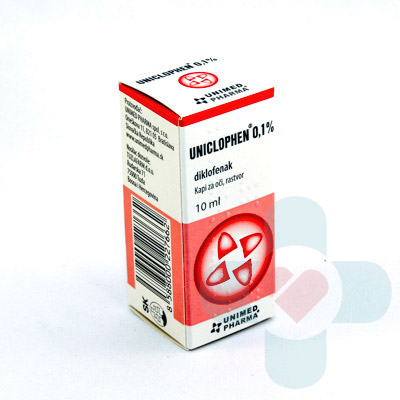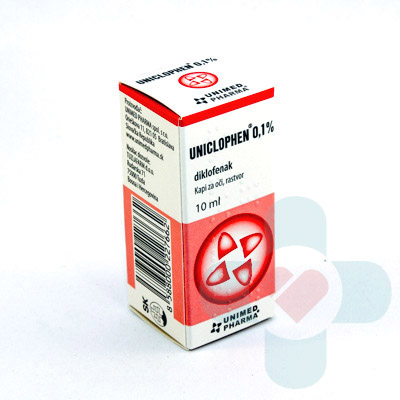
Also known as: Voltaren Ophtha
This medicine contains the active ingredient diclofenac which is also called a non-steroidal anti-inflammatory drug (NSAID), or just 'anti-inflammatory'. NSAIDs are used to ease pain, stiffness and inflammation. Diclofenac, as well as other NSAIDs, eases pain and inflammation by blocking the production of chemicals called ‘prostaglandins’, which are produced at sites of injury or damage. Diclofenac eye drops are used before eye surgery to enable pupils to remain open during the surgery; after eye surgery or eye injury, in order to control pain and inflammation; for the relief of symptoms such as red, itchy eyes associated with seasonal allergic conjunctivitis.[...]
This medicine contains the active ingredient diclofenac which is also called a non-steroidal anti-inflammatory drug (NSAID), or just 'anti-inflammatory'. NSAIDs are used to ease pain, stiffness and inflammation. Diclofenac, as well as other NSAIDs, eases pain and inflammation by blocking the production of chemicals called ‘prostaglandins’, which are produced at sites of injury or damage. Diclofenac eye drops are used before eye surgery to enable pupils to remain open during the surgery; after eye surgery or eye injury, in order to control pain and inflammation; for the relief of symptoms such as red, itchy eyes associated with seasonal allergic conjunctivitis.
Diclofenac is not suitable for everyone. Do not use it
In particular, you must tell the doctor if you:
Diclofenac interacts with other medicines. It is most important that you tell the doctor all the medications and herbal supplements that you are currently taking.
See the package leaflet for a complete list of possible contraindications and warnings.
This medicine is available in form of eye drops.
You should take diclofenac exactly as instructed by your doctor or pharmacist. The dose will be prescribed according to your condition and needs.
Do not use more of it, do not use it more often, or do not use it for a longer time than your doctor instructed. Do not miss any doses and take the medicine at the same time each day. Do not take two doses together if you miss a dose.
Read the information leaflet provided with your medication for additional information. Talk to your doctor if you have any additional questions.
Like all medicines diclofenac can cause side effects, including:
Consult a doctor if the side effects are severe. See the package leaflet for a complete list of side effects.